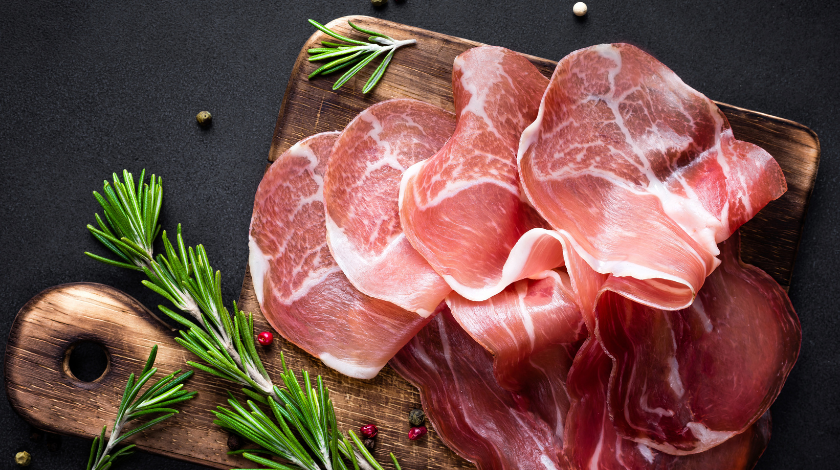
I still remember my first real taste of prosciutto. It wasn’t on a fancy charcuterie board at a party here at home. It was in a small, sun-drenched alimentari in Rome, the kind of shop where the air smells of aged cheese and dreams. The shopkeeper, with a kind smile, asked if I’d like a taste. He took a long, slender knife and, with a graceful motion, shaved a few translucent slices off a majestic, hoof-on leg that hung behind the counter. He laid them on a small piece of paper. I took one, folded it gently over my finger the way the locals do, and ate it. It wasn’t just salty or meaty. It was sweet, delicate, meltingly tender, and complex. It was a revelation. That moment turned my curiosity into a genuine love for this iconic Italian food. Today, I want to share that with you, to unwrap the mystery of prosciutto in simple, easy-to-understand terms.
What Exactly is Prosciutto?
Let’s start with the basics. The word “prosciutto” itself simply means “ham” in Italian. But when we talk about it in the context of fine food, we’re almost always referring to Prosciutto Crudo – a dry-cured, uncooked ham. Yes, you read that right: uncooked. But don’t let that alarm you. The intricate curing process makes it perfectly safe and incredibly flavorful to eat. Think of it not as raw meat, but as meat transformed by time, salt, and air. It’s a celebration of simplicity and patience, a way to preserve the very best quality pork and concentrate its flavor. In Italy, prosciutto isn’t just food; it’s a cornerstone of culture, often enjoyed as a starter (antipasto), a symbol of family gatherings and good living.
The Magic of Making Prosciutto: Salt, Air, and Time
So, how does a simple pork leg become this silky, flavorful masterpiece? The process is an ancient art, governed by strict rules in Italy, and it relies more on natural elements than on machinery.
It begins with the best pigs, often specific breeds raised on a regulated diet (think the famous Parmigiano-Reggiano cheese whey for Prosciutto di Parma). The fresh legs are first cleaned and trimmed. Then, they are covered in sea salt. This isn’t just for flavor; the salt draws out moisture, which prevents harmful bacteria from growing. After a few weeks in a cold, humid room, the salt is removed. Now, the second phase begins: resting. The ham rests for several months to allow the salt to distribute evenly deep inside.
Finally, comes the most beautiful stage: aging. The hams are moved to well-ventilated rooms, often with large windows that let in the fresh mountain or coastal air. Here, they hang for months or even years. As the seasons change, the ham slowly dries and matures. Enzymes break down the proteins and fats inside, developing that characteristic sweetness and complex aroma. The minimum aging time is about 12 months, but many are aged for 18, 24, or even 36 months for deeper flavor. The result is a product that needs no cooking, just skilled slicing.
The Two Kings: Prosciutto di Parma vs. Prosciutto di San Daniele
Not all prosciutto is the same. Italy has over 30 protected varieties, but two are world-renowned stars. Understanding them is key to appreciating the nuances.
Prosciutto di Parma comes from the Parma region, famous also for its cheese. It has a delicate, slightly sweet, and nutty flavor. Its symbol is a ducal crown, stamped right onto the skin. The pigs’ diet includes whey from Parmigiano-Reggiano cheese, which is said to contribute to its sweet note. The meat is a uniform rosy pink with a soft, velvety texture.
Prosciutto di San Daniele hails from the hilltop town of San Daniele in Friuli-Venezia Giulia. Its shape is distinctive – it’s cured with the foot on, giving it a guitar-like silhouette. The microclimate there, with breezes from the Alps and the Adriatic Sea, is considered crucial. Its flavor is often described as slightly more complex and robust than Parma’s, yet still elegantly sweet and delicate. Its mark is a brand showing a ham inside a triangle.
Which is better? That’s like asking if chocolate is better than vanilla. It’s personal. Parma is often praised for its consistent, delicate sweetness, while San Daniele lovers adore its deeper, more aromatic profile. My advice? Try them side-by-side. Have a slice of each, maybe with a piece of good bread, and see which song your taste buds sing.
Clearing the Confusion: Prosciutto vs. Ham, Bacon, and Pancetta
This is a common point of confusion, so let’s break it down.
-
Prosciutto vs. Regular Ham: The ham you might have at Easter or in a sandwich is usually cooked – boiled or baked. Prosciutto Crudo is dry-cured and air-dried, not cooked. They are entirely different products in texture and taste.
-
Prosciutto vs. Bacon: Bacon comes from the pork belly (the underside) and is almost always smoked and cooked before eating. Prosciutto comes from the hind leg and is not smoked. Their flavors and uses are very different.
-
Prosciutto vs. Pancetta: This is the trickiest. Pancetta is Italian cured pork belly. It’s often rolled into a cylinder. The key difference is that pancetta is not aged for as long and is designed to be cooked, usually diced and used as a flavor base for sauces like Carbonara. Prosciutto Crudo is aged longer and is primarily meant to be eaten as-is.
How to Enjoy Prosciutto Like a Pro
Now for the fun part: eating it. Here are some simple, foolproof ways to enjoy prosciutto.
-
The Star of the Antipasto: This is its classic role. Arrange 3-4 delicate slices on a plate. The Italian way is to drape them loosely, letting them create little folds and waves that catch the light. Enjoy it with a glass of dry white wine or a light red like a Bardolino.
-
Iconic Pairings: Some combinations are legendary for a reason.
-
Prosciutto e Melone: The sweet, juicy freshness of ripe cantaloupe or honeydew is the perfect counterpoint to the salty, savory meat. It’s a summer masterpiece.
-
With Fresh Figs: Similar idea. A ripe, soft fig offers a honeyed sweetness that pairs divinely.
-
On Bread: A slice of good, rustic bread (like ciabatta or a rosetta) with a dab of unsalted butter and a slice of prosciutto is a perfect snack. The fat from the butter complements the meat beautifully.
-
-
In Cooking: While it’s sublime raw, prosciutto can elevate cooked dishes. Wrap it around asparagus or scallops before roasting. Drape it over a chicken breast before baking to keep it moist. Toss crispy, pan-fried strips into a pasta with peas and cream for a quick, luxurious sauce. My personal favorite is a simple pizza: after baking, top it with arugula, shaved Parmesan, and ribbons of prosciutto.
-
The Slice is Everything: The texture of prosciutto is paramount. It should be sliced paper-thin, almost translucent. A thick slice will be chewy and overly salty. If you’re buying pre-sliced packages, look for ones where you can see the slices are separate and thin. At the deli counter, always ask for it to be sliced thin. A good slicer will use a long blade and a gentle hand.
Buying and Storing: A Beginner’s Checklist
Walking up to a deli counter can be intimidating. Here’s what to do:
-
Look for the Seal: For the authentic experience, seek out the protected names: “Prosciutto di Parma” (with the crown) or “Prosciutto di San Daniele” (with the triangle). This guarantees origin and method.
-
Color and Aroma: It should be a consistent rosy pink to deep red, with white marbling of fat. The fat around the edge should be creamy white, not yellow. It should smell sweet and meaty, not sour or strong.
-
At the Counter: Don’t be shy. Ask for a taste! Any reputable shop will offer one.
-
Storage: Once sliced, prosciutto dries out quickly. Consume it within 1-2 days for the best texture. Keep it in the coldest part of your fridge, laid flat between sheets of parchment or wax paper in an airtight container. Never store it in the plastic wrap from the deli balled up; it will sweat and become rubbery.
Conclusion
Prosciutto is more than just an ingredient; it’s an experience. It’s a story of tradition, terroir, and the transformative power of time. From its humble beginnings as a salted leg of pork to the sublime, melt-in-your-mouth delicacy on your plate, it represents a pinnacle of the food craft. You don’t need to be an expert to enjoy it. Just start with a few good slices, pair it with something simple and sweet, and take a moment to savor the complex, delicious result of centuries of Italian wisdom. Your culinary world will be richer for it.
Frequently Asked Questions (FAQ)
Q: Is prosciutto cooked?
A: Prosciutto Crudo, the most common type, is not cooked with heat. It is cured and air-dried for many months, which preserves it and makes it safe to eat without cooking. There is a cooked version called “Prosciutto Cotto,” but it is less common outside Italy and is more like a traditional moist, cooked ham.
Q: Is prosciutto healthy?
A: Like all cured meats, it should be enjoyed in moderation. It is high in protein and provides vitamins like B1 and B12. However, it is also high in sodium due to the salting process and contains saturated fat. A few slices as part of a balanced diet is a perfectly reasonable treat.
Q: Can I cook with prosciutto?
A: Absolutely! While it’s often eaten raw, it can be cooked. Add it at the end of cooking to just warm through, or crisp it up in a pan like bacon for a crunchy garnish. Just remember that because it’s thin and already salty, it can burn and over-season a dish if cooked too long or with high heat.
Q: Why is it so expensive?
A: The cost reflects the quality of the pork, the lengthy, hands-on curing process (which can take over two years), and the loss of weight during aging. A whole leg can lose over a quarter of its weight in moisture, concentrating the flavor and the cost.
Q: What’s the best way to slice prosciutto at home?
A: You need a very long, thin, flexible knife (a prosciutto or slicing knife) and a steady hand. Hold the knife parallel to the base of the leg and pull it towards you in one long, smooth motion, aiming for a slice so thin you can almost see through it. It takes practice! For most of us, buying it freshly sliced at the deli is the best option.