
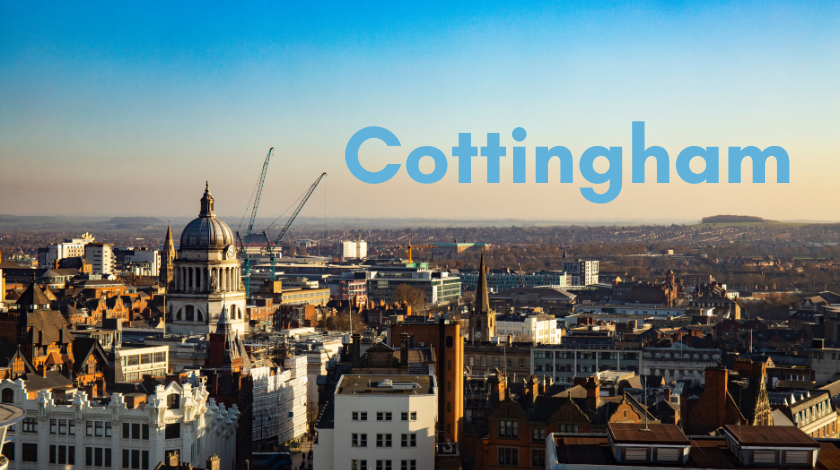
Let’s be honest, when you’re thinking about moving to a new place, the glossy brochures and optimistic estate agent blurbs only tell half the story. You want to know what it’s really like. The feel of the pavement on a Tuesday morning, the queue at the butchers on a Saturday, the sound in the local pub before a football match. Having spent considerable time in and around East Yorkshire, I’ve come to see Cottingham not just as a dot on the map near Hull, but as a place with a unique and somewhat defiant character. It proudly calls itself a village, yet it bustles with a life that would put many small towns to shame. So, is Cottingham a good place to live? Let’s peel back the layers and find out.
What Exactly Is Cottingham?
This is the first question, and it’s trickier than it seems. Officially, administratively, it’s part of the Hull conurbation. But to say “it’s a suburb of Hull” feels, to both residents and anyone who visits, like a minor insult. Cottingham has a heart and history that beats independently. Its centre isn’t a clone of modern retail parks; it’s a winding, broad main street called Hallgate, lined with independent butchers, greengrocers, cafes, and pubs that have stood for centuries. The architecture tells a tale – from the medieval allure of St. Mary’s Church to the elegant Georgian houses that whisper of a prosperous past. Cottingham manages to be both a commuter base for Hull and a completely self-sufficient community. This dual identity is the key to understanding its appeal.
The Balanced Scale: Weighing Up the Pros and Cons
No place is perfect, and the best way to judge is to look at both sides.
The Pros (The Shining Lights):
-
Strong Community Spirit: There’s a tangible sense of belonging here. People shop local, not just out of necessity, but out of preference. You’ll see noticeboards crammed with events for the village hall, gardening clubs, and charity runs. It’s the kind of place where faces become familiar quickly.
-
Outstanding Amenities: For its size, Cottingham is extraordinarily well-served. You have a choice of supermarkets (a large Waitrose and a Co-op), but more importantly, you have a proper, thriving high street. Where else can you find a traditional family butchers, a fishmonger, a greengrocer, and a dedicated cheese shop all within a few paces? This isn’t just convenient; it’s a lifestyle choice that supports local business and gets you better quality food.
-
Excellent Transport Links: Cottingham train station is a gem. Regular, quick services get you into Hull Paragon Interchange in under 10 minutes, connecting you to the city’s business centres, the St Stephen’s shopping centre, and the cultural offerings like The Deep. It also sits on the main line to York, Leeds, and beyond. For drivers, the A164 provides a direct route out towards Beverley and the M62.
-
Green Spaces and Accessibility: The village is fringed by beautiful walking areas like Cottingham Parks and the Westwood, a huge area of common land perfect for dog walking, kite flying, or just clearing your head. You’re minutes from the Yorkshire Wolds, yet also minutes from a major city centre. This balance is hard to beat.
The Cons (The Considerations):
-
Property Prices: Demand is high, and for good reason. This means property in Cottingham, especially the characterful homes near the centre or the coveted “old village,” commands a premium compared to many other Hull suburbs. You are paying for the postcode and the prestige. Rents can also be steep, particularly for family homes.
-
Traffic and Parking: The flip side of a popular, bustling centre is congestion, particularly on Hallgate and during peak times. Parking, while available, can be competitive. If you live centrally, you might rely on a permit or your own driveway.
-
The “Bubble” Effect: Some people jokingly call it “Cottinghamshire” – a playful nod to the feeling that it’s a world unto itself. While this is a pro for many, if you crave the constant, raw energy of a big city, you might find it a little too contained. It’s more refined than rowdy.
-
School Catchment Competition: Because the schools are so good (more on that next), living within the catchment area is a major driver of property demand and prices. It’s something you must check meticulously when house-hunting.
A Snapshot of the Cottingham Property Scene
The property market here is a tale of two halves. On one side, you have the stunning, often listed, period homes. Think substantial Victorian villas with high ceilings and original features, or charming Georgian townhouses. These are the crown jewels and sell quickly. Then there are the 1930s semis and post-war detached houses in the surrounding roads, which offer more garden space and are incredibly popular with families. Newer developments on the edges provide modern housing stock. My observation is that while you can find something at most budgets compared to the national average, your money buys less space here than in neighbouring villages simply because of the Cottingham premium. It’s a classic case of getting what you pay for: location, community, and convenience.
Education and Family Life: What Are the Schools Like?
This is arguably Cottingham’s biggest draw for families. It sits within the catchment area for some of the region’s most sought-after state schools. Cottingham High School and Sixth Form College consistently achieves excellent results and has a very strong reputation. For primary education, Cottingham Croxby Primary and Cottingham St Mary’s Primary are both highly regarded. This educational strength creates a stable, family-oriented demographic. You’ll see parents chatting at the school gates, children playing in the parks, and a general feeling that it’s a safe and nurturing environment to raise a family. It’s this foundation that cements the community for the long term.
The Social Fabric: Pubs, Food, and Where People Meet
If you want to gauge a place’s soul, skip the estate agent and head to the pubs. Cottingham’s social life is anchored by its brilliant hospitality scene. You have traditional, no-nonsense pubs like the Milton Arms, perfect for a quiet pint. Then there are food-focused gastropubs like The Croxhill or The Duke of Cumberland, where the dining is as important as the drinking. For something more contemporary, D’Vine offers great wine and small plates.
But it’s not just about pubs. The café culture is strong. From grabbing a bacon sandwich at a local greasy spoon to enjoying a flat white in a modern café, there are spots for every mood. The monthly Cottingham Market adds to the buzz, and events like the Cottingham Springboard Music Festival show a village that loves to celebrate itself. It’s easy to build a social life here without ever needing to get on a train to Hull, though that option is always there for a night at the theatre or a bigger shopping trip.
Conclusion: So, Who Would Thrive in Cottingham?
Cottingham isn’t for everyone, and that’s its strength. It selects for a certain preference. You would likely love living in Cottingham if: you value community and independence in equal measure; you prefer a local butcher to an anonymous supermarket aisle for your meat; you want excellent schools and are willing to plan for them; you appreciate being able to walk to a good pub or a lovely park; and you need, or enjoy having, easy access to a city without living in its midst.
It might not be the best fit if: your budget is very tight and maximum square footage is your priority; you thrive on the anonymous, ever-changing energy of a major metropolis; or you dislike the fact that popularity brings with it traffic and competition for housing.
In my opinion, Cottingham’s secret is that it has confidently held onto its past while comfortably embracing the present. It hasn’t sold its soul for convenience. It offers a quality of life that is tangible – built on good food, good company, green spaces, and a strong sense of self. It’s more than just a place to live; for those who buy into its ethos, it’s a genuine home.
Frequently Asked Questions (FAQ)
Q1: Is Cottingham a village or a town?
A: This is a classic debate! Cottingham is officially classified as a village and its residents fiercely defend that title. It has the historical roots, the parish church, and the community feel of a village. However, due to its size, population (over 17,000), and extensive amenities, it has the substance of a small town. Most people settle on “large village” or “village with town-like facilities.”
Q2: How much does a house cost in Cottingham?
A: Prices vary widely. A modern two-bedroom terrace might start from around £180,000, while a three-bedroom semi-detached house in a popular area typically ranges from £250,000 to £350,000. Larger period properties or detached family homes in prime locations can easily exceed £500,000. It’s always best to check current listings on major property portals for the most up-to-date picture.
Q3: What is the crime rate like in Cottingham?
A: Compared to national averages and to parts of nearby Hull, Cottingham has a relatively low crime rate. It is generally considered a safe place to live. As with any area, minor incidents like anti-social behaviour or occasional burglary can occur, but serious crime is uncommon. Official police crime maps provide useful street-level data.
Q4: How far is Cottingham from Hull city centre?
A: It’s very close. By car, it’s roughly 4-5 miles and can take 15-25 minutes depending on traffic. The train is often quicker, with the journey from Cottingham station to Hull Paragon taking just 7-9 minutes on a regular service.
Q5: Does Cottingham have good schools?
A: Yes, this is one of its major attractions. Cottingham High School is an outstanding secondary school, and there are several highly-regarded primary schools within the village, including Croxby Primary and St Mary’s Primary. The demand for places is high, so living within the catchment area is crucial.
Leave a Reply