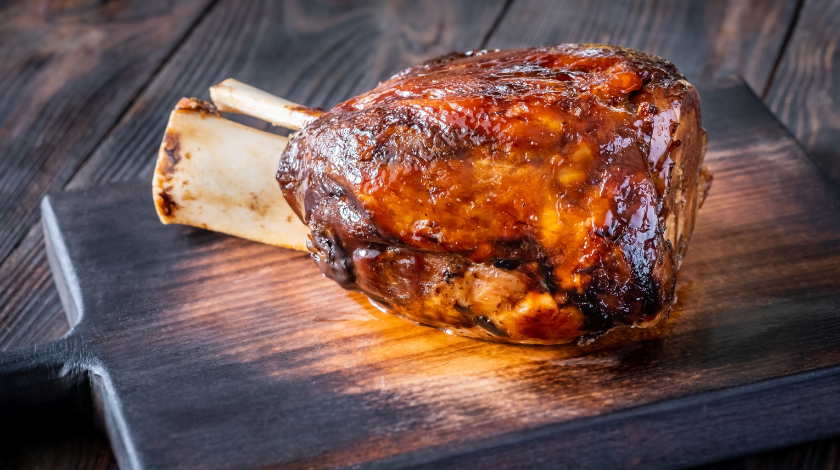
Let’s be honest, the first time you see a ham hock at the store or in a recipe, it can be a little intimidating. It looks, well, a bit gnarly. It’s a big, bony piece of meat, often smoked and covered in skin. You might wonder what you’re supposed to do with it. Is it even meant to be eaten, or is it just for show?
I get it. I remember standing in my grandma’s kitchen as a kid, watching her drop one of these into a giant pot of bubbling lima beans. I was skeptical. But then, hours later, the smell that filled the house was something I’ll never forget. It was deep, smoky, and rich in a way I couldn’t explain. When I finally tasted those beans, it was a revelation. The ham hock didn’t just add “ham” flavor; it added a soulful, savory depth that made the entire dish feel like a warm hug. That experience taught me that the ham hock isn’t an odd ingredient; it’s a secret weapon.
So, what exactly is this magical, misunderstood piece of pork?
What Is a Ham Hock, Really? (It’s Simpler Than You Think)
Think of a pig’s leg. The upper part, the thigh, is where we get hams. The hock is the joint that connects the foot to the leg, essentially the pig’s ankle. It’s a bony, tough, fatty, and collagen-rich cut because that joint does a lot of work. That’s the whole secret right there.
Because it’s so tough, you can’t grill it like a steak. It needs the low and slow treatment. And all that collagen and fat? When cooked slowly with moisture, they melt. The collagen transforms into gelatin, which gives broths and soups a luxurious, silky body. The fat renders, carrying incredible flavor into everything it touches. You can find ham hocks smoked or unsmoked. Smoked hocks (the most common) have that classic bacony, campfire aroma. Unsmoked are milder, more like a fresh pork flavor.
Why Bother? The Humble Ham Hock’s Superpowers
In our world of quick meals, why spend hours cooking a bony piece of meat? Three brilliant reasons.
First, flavor you cannot fake. A ham hock provides a complex, layered savoriness that a tablespoon of liquid smoke or a few bacon bits just can’t replicate. It’s a slow infusion of salt, smoke, porkiness, and umami.
Second, it’s incredibly kind to your wallet. Ham hocks are one of the most affordable cuts of pork. One hock, often costing just a few dollars, can flavor an entire pot of soup or beans that feeds a family, stretching your food budget in the tastiest way possible.
Third, it creates texture and body. That gelatin I mentioned is a game-changer. It’s what turns thin, watery bean broth into something that coats the back of a spoon. It makes soups feel substantial and satisfying. It’s old-world kitchen wisdom that delivers results every modern cook wants.
Alright, I’m Sold. How Do I Actually Cook This Thing?
Don’t worry, it’s almost impossible to mess up. The core principle is simple: gentle, moist heat for a long time. Here’s the basic method that works every single time.
Start by giving your ham hock a quick rinse under cold water. If it’s very salty (which some smoked ones are), you can soak it in cold water for a few hours or overnight in the fridge, changing the water once. This mellows the saltiness.
Next, place it in a large pot and cover it with at least a few inches of cold water. You can add a few rough-cut vegetables like an onion, a carrot, and a couple of celery stalks for extra flavor. Don’t add beans or greens yet. Bring it to a boil, then immediately reduce the heat to the lowest possible simmer. You want a few lazy bubbles breaking the surface, not a rolling boil. Cover the pot partially.
Now, you wait. Let it simmer gently for about 2 to 3 hours. You’ll know it’s done when the meat is pulling away from the bone and is completely tender. The smell in your kitchen will be your reward.
Once it’s cool enough to handle, the fun part begins. Pull the hock out of the broth. Place it on a plate and use two forks or your fingers to pull all the delicious meat off the bone. There will be tendons and bits of skin; just separate the good, tender shreds of meat. Chop it up and return it to your pot. That broth you created? Liquid gold. Strain it if you like, and now you have the most amazing base for your dish.
From Basic to Brilliant: What to Make With Your Cooked Ham Hock
This is where your pot of flavored broth and meat becomes dinner. My absolute favorite, the dish that takes me back to my grandma’s kitchen, is Simple Hearty Bean Soup.
Take that beautiful ham hock broth. Add a pound of dried beans (like navy, pinto, or great northern) that you’ve soaked overnight, or use the quick-soak method. Add the chopped ham hock meat back in. Bring it to a simmer and cook until the beans are creamy and tender, maybe another hour or so. The beans will soak up all that smoky, porky flavor. The broth will thicken naturally from the starches in the beans and the gelatin from the hock. Season with a little black pepper at the end. You might not even need salt. Serve it with a piece of cornbread for sopping up the broth. It is the definition of comfort food.
Another classic is Southern-Style Collard Greens. After simmering your ham hock and removing the meat, use that broth as your cooking liquid for a big bunch of washed and chopped collard greens. Simmer the greens in the broth for 45 minutes to an hour until they’re tender and have lost their bitterness. They absorb the smoky, savory flavor perfectly. Add the chopped ham hock meat back in at the end. It’s a side dish that steals the show.
And you can never go wrong with Split Pea Soup. Simmer the ham hock with dried split peas, a chopped onion, and a couple of carrots. The peas break down completely, and the hock makes it incredibly rich and satisfying. Fish out the bone before serving, shred the meat, and stir it back in.
Finding and Storing Your New Secret Ingredient
You can usually find ham hocks in the meat section of a well-stocked grocery store, often near the bacon or other packaged pork. If you don’t see them, ask the butcher. They almost always have them in the back. Farmers markets or local butchers are also fantastic sources, and you can often get them unsmoked there.
They keep for a long time. In the fridge, in its original packaging, it’s good for up to a week. For longer storage, freeze it. I often buy two or three when I see them and toss the extras in the freezer. They can be cooked directly from frozen; just add a little extra cooking time.
A Final Word of Encouragement
Cooking with a ham hock feels like tapping into generations of kitchen wisdom. It’s a reminder that the most flavorful meals often come from the humblest, most affordable ingredients, treated with a little patience and respect. It’s not about fancy techniques; it’s about understanding how to coax flavor and texture from something simple.
So next time you’re planning a pot of soup or beans, skip the bland bouillon cubes. Grab a ham hock instead. Give yourself the afternoon to let it work its magic. I promise you, the first spoonful will make you understand why this funny-looking piece of pork has been a cherished ingredient for so long. It doesn’t just feed you; it comforts you. And that’s the best kind of cooking there is.
Conclusion
The ham hock is far more than a simple soup bone. It is a powerhouse of flavor, texture, and affordability, a testament to the idea that great cooking doesn’t require expensive ingredients. By understanding what it is a tough, collagen-rich joint and applying the simple, forgiving method of slow simmering, any cook can unlock its potential. It transforms basic beans, greens, and soups into deeply satisfying, memorable meals. Embracing the ham hock is a step towards more flavorful, economical, and soulful home cooking.
FAQ (Frequently Asked Questions)
Q: Do you actually eat the meat from the ham hock?
A: Absolutely! After slow cooking, the meat becomes tender, flavorful, and shreddable. It’s the best part. You pick it off the bone and add it back to your dish.
Q: Is a ham hock the same as a ham bone?
A: They are similar but not the same. A ham bone is the leftover bone from a cooked ham (like a holiday spiral ham). A ham hock is a specific, smaller joint from the ankle, usually sold raw and often smoked. A ham hock has more connective tissue and fat, making it often better for creating rich broth.
Q: Why is my ham hock so salty?
A: Many ham hocks, especially smoked ones, are cured with salt. If you find your dish getting too salty, you can soak the hock in cold water for several hours before cooking to draw out some salt. Also, avoid adding extra salt to your dish until the very end, after you’ve tasted the broth.
Q: Can I cook a ham hock in a pressure cooker or Instant Pot?
A: Yes, and it’s a great time-saver! Cook on high pressure for about 45 minutes to an hour with natural pressure release. It will be just as tender as after hours of simmering.
Q: How do I store leftover cooked ham hock and broth?
A: Let them cool completely. Store the shredded meat and broth separately in airtight containers in the refrigerator for up to 4 days. Both freeze exceptionally well for up to 3 months. The broth may gelatinize when cold, which is normal; it will liquefy again when reheated.